Showing posts with label Film reviews. Show all posts

Tuesday, 13 December 2011

Film reviews - The Trueman Show

The Trueman show (1999) was Directed by the creative mind of Peter Wier. This film uncovers that Postmodern concept of not feeling like your own reality is actually correct - that the vibe for life is somewhat altered and has no real grounds for understanding. It is based on how a man has grown up in an artificial reality since birth, that he is the main star of a reality TV show that basically recreates the ideal suburban American dream yet exploits a man as if he is an Animal in a Zoo. It is the ultimate "Big Brother" - a story about seeing through the lies of organised reality and finding out ones own true identity. It is exactly this notion that "Trueman" (Jim Carey) comes to find when his life seems to go nowhere; That there is no place for his own choices and interests to develop, that anything he reaches out for is torn away from him. This builds suspicion, that his own reality isn't exactly that - it isn't his own at all. The feel for the repetitive daily life cycle of Trueman, from the same people talking to him everyday, the same Car's passing at the same time, to his shifts in a typical dull Office and how his closest friends and family seem to "act" in a fashion that seems like someone else is with them. It all becomes too much and we see Trueman start to unlock these strange puzzles that seem to coincidental to be "real".Then one day Trueman feels a real surge of emotion that he seemingly hasn't felt in a genuine manner before when he meets "Lauren" who's real name is Sylvia (Natasha McElhone). This feeling is love, and we see Trueman scurrying around becoming obsessed to find out who she is. Fortunately for Trueman come to meet this character on more than one occasion, who eventually pulls Trueman to the side and exploits the truth about his curiosities. With nowhere to hide or run, Sylvia has to tell Trueman all she can as quickly as she can and insists that Trueman is to find her when he gets out. The film continues to spiral into Trueman doing his best to escape the fake TV enviroment, being warned the world outside is only as real or more so imperfect than the one he has grown up within.


The way in which this film develops a meta narrative about reality and what is real somewhat creates an uncanny depiction of the world around us and gives this film a strong, heart warming moral about individuality and what it means to be alive.

The colour scheme and lighting used within this film really reflects an almost perfect American suburbia, yet to a point where it is so cliche that it seems to shout that there is something not quite right about it. It consists of bright colours and almost a 70's style of spirit. People tend to indulge into advertising items on set, which is actually a real advertisement for a real product, usually getting Trueman involved as much as possible.

The language used is very clean and appropriate for all ages at all times, it seems that the art of swearing and violence is as  non existent as the realness of the people in Trueman's world. The music used within the film reflects the typical kind of music you would encounter in a drama series on TV - it moves in and out with the emotions that the characters portray. We see the people in control of the music behind the scenes of Trueman's world when the film shows the people in control of the shows ongoing live progression. It is interesting to note that Trueman only ever really listens to music of his own within places like the Car radio, where it can transcend into the output of the live show itself. Obviously, any atmospheric musical composition made in the control room would clash with any musical sound Trueman plays by himself. This like many things however is something that is controlled in a way Trueman becomes blissfully aware of, even family photographs of himself, or false truths imposing fears to keep him from indulging in his interest of Fiji. The camera work is a mixture of the Big Brother style narrative with the use of regular film shots, yet it all feels like one large well edited observation of someone without their consent.

Overall a fun lively, yet heart warming and slightly controversial film.


Chris

Film reviews - The day the Earth stood still

The Day the Earth Stood Still (1951) was Directed by Robert Wise and helped to spawn the start of the "Alien invasion" movies that we still see popular to this day.

We see the Alien Klaatu (Michael Rennie) and his robot sidekick Gort (Lock Martin) land on Earth just post action of the last World War, which is spawned concern from the neighbouring civilisations in the starry consolations above. Klaatu must inform the world leaders that if the people of the Earth did not change their ways then the aliens would have no choice but to destroy Earth to protect other worlds in the Universe. As this task starts to appear more difficult than he first perceived, Klaatu decides to embark on further action - by draining the world of power to get attention.


The film work produced here is classic of its day - lots of clever tricks to get around things before the invention of the special effects we have today. Things such as reversing the tape of the door to the space ship opening to make it close and save costs on film and time - the space suit of the robot Gort having two models, one with a zip at the front for behind shots and one with a zip at the back for frontal shots. It is also to note that this suit was very heavy, so the scene in which Gort carries Helen (Patricia Neal) he wasn't actually carrying a real person, but was carrying a dummy in replacement.

For its time the special effects used were state of the art, however you can see how they have tried to create story around over excessive use of the primitive (and expensive) effects of its time to avoid extra cost and to keep the film believable. It was originally wrote by Harry Bates, then later turned into a screenplay by Edmund H. North. The filmic version of the original story is vastly different in many comparisons. In the story, Klaatu is killed my a maniac (not a soldier) straight away on arrival to Earth. It puts mention that Gort the Robot comes to life every night to continue his quest and that he recovers a recording of Klaatu's voice from his tomb and uses it to make a copy of him. The way in which Klaatu warns the Earth of the consequence towards its actions is different to the overall way in which the film conveys this; From giving a Scientist the key to an extreme mathematical problem, to deactivating all electrical appliances on Earth asides from those which affect Human safety and being revived from the dead to give mankind the required message. When Klaatu is killed, Gort brings him back to life temporarily to communicate with the Humans gathered around the Spaceship, which is obvious for the many people to be the source of the strange events that have occurred. In the original story, it is then revealed that Robots are the actual true Masters of the Universe and that Organic beings are of less importance in the hieorachy of exsistence.

A film which uses every display of emotion, visual magic and clever twists to the plot that it can, "The Day the Earth Stood Still" really stands out as a legend amongst Science fiction.

Chris

Monday, 12 December 2011

Film reviews - American movie

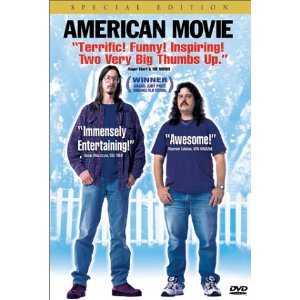
American movie (1999) Directed by Chris Smith that was, ironic to the films plot, premiered at an independent film festival where it achieved the Grand Jury Prize. This film is a Documentary based on an enthusiastic, aspiring filmmaker who wishes to fulfil the creation of his own incomplete horror movie by financing the project himself and smashing his dream. Starring Mark Borchardt as the avid Filmmaker, we see him scramble through attempts to rally up a usable team to complete his creation, the cheesy low budget horror movie "Coven". It was his own demons that originally stopped him from pursuing this dream, but no more - he is determined to over come any bottle that comes in his way to fulfil his dreams. Wanting to over come this lack of self asteem he is determined to not fail: by asking anyone from relatives to the local theatre, pulling together a cast which although he struggles to keep in line prevails in the end with a classic, heartwarming moral of realising his movie is more connected to his pride of being American and what it means to be one - it is his own "American dream".


As you can see the film itself is comprised of the typical first person style attack of a Documentary, giving the audience a "feel" of living out what the subjects go through themselves. This therefore becomes a more personalised stylation of film, where the audience feels an interaction with the cast and a more emotional understanding of  the characters.

It puts the fight into how if you want something, then your supposed to get off your arse and do it. Like many people, myself involved especially, we all have dreams but all too often you will see that person who can't stop throwing off excuses and never gets to the point of their ambition. It is this very feeling that Mark storms through, which although we witness his fatigue from time to time he never lets himself down. In many ways this film therefore is inspiring to everyone who watches it, it gives you that positive feeling to make you want to get up and acheive your dreams.

In many ways the fact that this film is a film about making a film by a filmmaker basically shows a metanarrative to itself - everything that it does somehow references itself in the structure it is based around.

Chris

Wednesday, 30 November 2011

Film reviews - Lost in La Mancha


This film is based around the film that could never be made, the tale of Don Quixote. It is said to be a cursed film, a hex upon whoever tries to tell it's tale to fail and end up with nothing more than broken fragment's of ingredient's that go no farther than the bin. Contract's were unsigned, budgets were to be met, deadlines were to be made and nature discouraging the team spirit. All these thing's helped to ruin the adaptation of Don Quixote that Terry Gilliam would obsess over to become his filmic reality, however putting together this amusing film as a result.

All the film from the start is based within a Documentary style follow along with the crew, as if to be used for a DVD extra, yet innocently unaware that this is the main camera for their infamous success.  Nevertheless, Gilliam continued with his quest, but after a mere six days of shooting, Spanish Air Force jets ruined several takes, flash floods destroyed several sets, and as the Film project struggled to pursue a positive course the elderly Actor playing "Don Quixote" himself, Jean Rochefort, suffered from a severe back injury and could not continue for medical reasons. Rochefort's departure was enough to put the film on a Hiatus that sent the Film's pursuit into a fallen ending. We even see modern heart throb actor wonder boy "Johnny Dep" involved on the project, almost treated as a nervously handled pile of Gold as nothing else on the project was to give it any viewing substance. In many ways, Dep seems to be acting as himself, aware of being on a Camera even off set and has a flow about him that seems to depict a role even through a documentary of this kind. The use of Jean Rochefort was almost comparable to that of Ed Wood's obsession with his prized Bela Lugosi and in many way's this film reflects the same audience involvement as Tim Burton's adaptation to Ed's life in his own film based Biography on Ed's career. Interestingly enough that Johnny Dep played Ed and plays the role of a creators key to success within this awkwardly amusing piece of work.

Instead of realising this experience as a negative, they saw the amusing revelation that they had caught this catastrophe on camera for their film diary and that as this seemingly did not get caught up within the bad omen that the onlooked film suffered itself. If anything this caught the comedic element of how the film fell apart, giving the audience a heart warming look into the world of a man's masterpeice not developing exactly how he wishes to see it, yet laugh at his luck with a good spirit knowing it has worked out in it's own way.

Obviously, the Camera work is natural, not as if directed but brought on in a first person perspective, yet managing to not seem obvious amongst the crew that it is observing upon. The Camera picks up conversations and moment's of heightened emotion, all seemingly unaware of their action's becoming an unscripted movie. What you will come to understand about this approach is it simply becomes a film within a film, an onwards self reference that turns the original depiction into a new frame of outcome where the acting becomes real life and the experiences are real.

There is clever use of the footage collected, by turning it into usable scenes cut down and edited together on purpose to develop something filmic out of something that originally had no intent to be existent. You will on occasion notice the film steps out of itself to be narrating about how the experience was ongoing, how it should have been and where it went wrong, or consistently approaching the story of "Don Quixote" with an obsessive nature. It even on occasion indulges into 2D animations which daydream away from the reality into what could have been and is still merely a dream in the mind of its creator, a film full of restrained disappointment in what should have been Terry Gilliam's finest creation.

Chris Simmons

Sunday, 20 November 2011

Scream 4 review

Film reviews

Scream 4 (Wes Craven - 2011)

Scream 4 is an explosive, violent action packed film full of references that pay homage to its original Trilogy. As the original film "Scream" was so popular, it brought a whole new wave of typical generic acts that it managed to elaborate, thus many films of a similar genre ensured a depiction along this path. It spawned an ironic comedy called "Scary movie", which meta narratives the acts performed within the Scream movie and other classic films of its kind. Considering its place is still within the horror genre it is well placed towards a light hearted context so that the audience can clearly gain a sense of appreciation through its stylistic techniques. This makes the movie fun to indulge into, however adds more room for the story to develop. In a similar way to films such as "Kill Bill" or "Scott Pilgrim V's the World", we see the rules of either cinematic or real world laws of nature failing to apply. A post-modern edge such as this helps the story teller to interact further with the audience to almost communicate farther with them than if submerged within a generic modernist style cinematic approach.

The story is a depiction of self indulgence into its own trilogy, which done well enough to almost set the rules of how a slasher film should be layed out. Therefore, it pretty much is a reference to itself throughout the entire movie, which is what the characters must follow to ensure their survival through the film.
The film opens with a series of openings reminiscent to the original Scream movie, where the character Casey was killed off within a few minutes, setting the scene for the films intention from the start. In this film, however, this event is played on and we see a set of characters watching films from what is the "Scream" series within its own movies world, entitled "Stab". In a sense, this becomes a catalyst for the whole movies pursuit.


Scream 4 seems to somehow over rule the trilogy and offer more scares based on what we come to expect from the other films and their ways of producing sticky situations. This film develops in a relentless, unapologetic depiction of meta reference and mind boggling twists which turn the audiences anticipation upside down on a consistent basis. In other words, if your watching this film trying to work out the storyline and who done what, you wont fully gain any full understanding until the end. You will come to find plot holes aplenty and moments which could make you wince with an awkward smile, but it definitely shines in the right places. Theres no doubt a sense of deconstructional humour fully injected into this

The film is basically a "who done it" Slasher, where the murders appear reminiscent to the murders of the small town that the original Scream, yet we all know it has to be another psycho on the loose with some strange new motive to reinact these crimes. In turn we come to find that it is Jill (Emma Roberts) the Cousin to Neve Campbell's character "Sidney" who is jealous of the attention that Sidney receives from being the victim of the original Woodsboro murders.

Wes Cravens suspense set-ups are a little overcooked, but he does manage to keep things moving at a fine pace considering his task of juggling umpteen characters and the necessary tonal shifts within the pace of the movie.
The musical stamp embedded within the duration of the movie stays consistent to the previous Scream films, and to that of typical Teen/suspensive Horror movies. The use of the camera, lighting and dialogue hasn't changed much either, so although the film somewhat feels old and like used property, it flows forwards with so much familiar ground yet builds many opportunities for something new and appreciative for the audience to enjoy.

Overall this is a great movie and I think it is the best of the Scream films created as it somewhat summarizes the whole franchise.

Chris

Film review - Funny games


Film reviews
Funny Games (Dir. Michael Haneke - 2007)


If disturbing chaos is your thing, for whatever reason, then this is the movie to indulge in. The 2007 film funny games reeks of relentless self introversive nature. We come to find uncanny effects of how a familiar, comfortable home can be turned into a sinister prison for suspensive acts of terror. 
 Due to its calm nature, unorthodox timing and use of jokes in horrific situations that many would consider the material of nightmares. Unfortunately, things like this really do happen in the real world, and when they do they come unexpected. Thus, just like the somewhat "trippy" nature of this film, the story may be confusing in the scary reflection of real life circumstance. 


I found myself backing the two "men" in the film of whom were committing the crimes, it was all so "innocent" and charming to watch. Their brutality was hidden under a white sheet of manners, most usual mannerisms of violence being churned out in an opposite approach. When the villains left the film for a short while, I became bored watching the Mother (played brilliantly by Naomi Watts) scrambling around in attempts to resolve her horrific situation. The film suddenly lacked its kick in these moments where I observed from my colleagues a sense of unease, a disturbance, an awkward silence, as if the room wasn't quiet enough already.


The film is based around American suburbia by a beautiful landscape, a lake with neighbours spread across far and wide. Some neighbours would reach each other by boat, as a result of the kind hospitality that these individuals show they enjoy the warm company of their tidy neighbourhood. So, everythings perfect. Brilliant scene for what they wouldn't expect - murder - and lots of it.


One sunny afternoon Ann Farber is preparing her family a dinner when the doorbell rings. Her son Georgie answers, only to come face to face with a ghostly faced smile from a well groomed teenager. This boy is called Peter, who lurks his way into the family house by asking for Eggs claiming to be coming from the house next door. Already you can sense the unease, this entity in the house gives off a presence which shouldn't be there, he is almost uncanny to his own image. His nervous position covers up his bad acting when he repeatedly drops the eggs until there is only a few left. In comes Peters co-killer Paul, dressed in a similar fashion and just as clean cut in appearance. The violence starts as Peter manically asks for the eggs, and swings a Golf club at Ann's husband, George Farber. This Golf club was also used as a test weapon on the family's Dog, which Ann later finds dead in the back of her Car. 


One thing to note is almost how idiotic the family was, how they had the chance to easily over power the two boys yet they never took the chance. In some respects this is why I prefer the villains in this film, they are intelligent and seem to be merely Cats playing with Mice. As a result I would of found it even more thrilling if we saw multiple family murders within this film, and some outside force attempting to track them down and stop them at their game. 


I found the use of breaking the forth wall interesting, an addition to an insight into the maddened mind of Peter and Paul in their attempt to plan their murders. In some sense, what also made this movie interesting is that as Peter and Paul are aware of the audience, it almost seems like this murder has been fixed up, like a film they have seen one too many times that they are trying to reconstruct. The addition to different movie like qualities, such as rewinding time when Ann kills Paul to bring Paul back to life are interesting, and to me show that indeed the two boys are merely just playing nothing more than a game. Who's to say their not harming anyone at all? Perhaps they plan to rewind all of these events once they have finished, perhaps they are all in on the act, perhaps they are really the captives inside a prison of some sort being made to act out a television show to save their own lives. Thinking outside the box suddenly makes this film less violent, or "weird". 


Paul: You can see it in the movie right? 
Peter: Of course. 
Paul: Well then she's as real as reality because you can see it too. Right? 
Peter: Bullshit. 
Paul: Why? 


This confirms my previous take on their situation, also making a somewhat disturbing analysis that anything you see on the screen is just as real as anything you see in real life. This brings the notion that the film itself is actually real, pixels are producing light, just like any other source of image will reflect light into your retina to produce what we call sight. So are the people in the films doomed to eternal deaths and misery? Is there anyway to save them? Of course there is, they answer this themselfs - rewind! However, just like real life there is no way you can prevent this from happening, as someone out there will be playing the same film anyway. You cannot escape from death.


Paul and Peter continue on their quest, betting that the family will all be dead by morning. Of course, they are right. They manage to kill of the family one by one, starting with the boy. They play with the family by leaving them for a while, hoping they would try nervously crawling out looking for help only to crawl back into their path of pure passionate evil. Dragging them back into the hell of their own home, they finish the job. As morning kicks in they don't break their bet, they push Ann off a boat as they float across the peaceful lake to their next awaiting innocent victims.


Overall, good film. Kind of quirky, had its cheesy moments which made me laugh, the violence was a little bit too forced at points and in some respects it was a bit too slow mid film. On another perspective this film is incredibly disturbing, managing to unlock that confusing yet uneasy sense you would usually associate with nightmares. The storyline I felt should of been broadened out to a larger scale as I previously suggested, to make this film even more bloody and disturbing, also giving it a chance to fly off the wall with a tons of additional cinematic blasphemy.


Chris

Tuesday, 15 November 2011

Film review - Moulin Rouge

Film review
Moulin Rouge - (Baz Luhrmann 2001)


This touching film explodes onto the screen with vibrant, bright, dazzling energy that unleashes a contentment for life - then amazingly pulls at the heart strings in a flurry of realisation back into reality. The euphoria you feel at the start of the film, which is almost just too theatrical to be on the cinema, is certainly shaken to wake you up and realise how precious every little second of life truely is. The moral to this story for me is, take what you can, do not waste life and make the most of life in the moment.

The film is based on Ewan McGregors character, "Christian", embarking on a journey to Paris, where he encounters the bohemian society of the Moulin Rouge. It is here where he and his new friends, of whom are neighbours of his new apartment go to let loose and enjoy life. Christians friends arrange a naughty swindle to get him and the lead attraction of the Moulin Rouge "Satine" to get together after the show. Of course, this happens and Christian isn't to repel this offer, as he believes she genuinely wants to meet up with him after the show. Satine on the other hand believes that Christian is a duke of whom she was suppost to be meeting before the fix up, who the head of the Mouline Rouge "Harold Zidler" is hoping will take interest in his finest attraction. Harold wishes to make a deal, of which could make the Moulin Rouge a lot of money, to do this he must pull a few strings. In true fashion to the day where women were less respected, Harold uses Satine as bait to blind Harold into agreeing to sign the paper.

The twist is, Christian falls deeply in love with Satine. From the moment he met her he was transfixed, as he has a funny obsession with love, yet believes he has never felt it before. As a writer, it is his one ambition to know what it feels like so he can pursue his writing to its fullest. The problem with Satine is that she is so used to pretending to feel love for Gentlemen, so used to prostituting herself, that she fails to initially accept her true feelings. This is probably because she is confused by emotion, something of which she is used to holding back, ignoring and getting on with each day at a time.

I love how it provides that artificial grasp at the feeling of love by building an emotion. It uses the qualities such as build ups, tension, held back passion and the longing of two people with the same passion, even if something gets in their way they fight back to fall back into each others arms.


Over the course of the film we find out that Satine is terminally ill and to pursue his plan, the greedy Harold makes her carry on performing, not allowing her to find out about her condition. The jealous Duke makes sure nothing stands in the way of his prized Satine, so when he becomes suspicious about Christian he puts up a plot to have him killed. It is here where we find out that Satrine really loves Christian, as she sadly is forced to tell him she doesnt love him after finding out his fate, and unfortunately, her own. In an attempt to save Christian from a broken heart and an early grave, she knows this is the only way. We know that Satine is talented in the art of acting, usually to give a man what he desires, so she puts this skill to use for an opposite effect for the first time.

I noticed how the film starts out fast and jerky, with impatient cuts and energetic displays of camera work. Over time, in contrast to Satrines quickly declining condition, the film begins to slow down. Thus, this is when the powerful death scene takes place. Christian returns to the Moulin Rouge for one last time to declare how he feels about Satine, which turns into an attempted murder on Christian. I felt a sense of sadness at Christians bravery, however it was not for nothing. He made the love of his life feel for the first time and be able to acknowledge it, in that moment of death where she was slipping away in his arms that whisper spoke a thousand lifetimes. As a result, Christian continued her memory with the fulfillment of what he always wanted - to understand and feel the power of love. So he wrote, with a heavy heart and in his lonely state, about Satine and her impact on his life. This somehow compares to most broken relationships, many come to think of love as happiness, whereas most humans will know the happiness is usually within the indulgence of another, yet man is never satisfied in the end.

Overall a brilliantly crafted film which I have a lot of time for. Powerful and entertaining, shocking and emotive.

Chris

Film reviews - Scream

Film review
Scream (Wes Craven – 1996)

Scream was Directed by Wes Craven and released in 1996.

Scream is one of them movies that open’s straight into the action, preparing the audience for a thrilling ride of viewing intensity and a warning of bloodied gore early on. The opening sequence to the film is almost the most memorable part of the film and we make a connection with the Character Casey, played by Drew Barrymore, almost instantaneously. She is in effect the MacGuffin of the movie, as she is what is referred to throughout yet taken out of the film physically very early on.

The movie is about the murder of a School Girl, who is one of a number of people targeted by a Hooded, Ghost faced costumed killer on the loose in a small American Town. The first Girl to be killed, Casey, sets off a local pandemonium mainly within the Towns High School. The Teenagers are all both suspects and to be protected, incase this killer goes loose again.

In typical slasher movie style, there are tension build-ups, chilling music and almost predictable outcomes. The classic sign given in Scream that a character was going to be killed was by receiving a phone call from the killer infamously called “Ghost face”. If anything this film is an attempt at recreating the slasher effect of the early films of this style while avoiding an initial cliché. It pays homage to a lot of old characteristics of film making origin of its kind, yet somehow still upholds a modern, more lighthearted feel.

The film, although always being drove onwards by the initial panic and mystery of Casey’s murder, follows a young Student named Sidney (Neve Campbell) who comes to find she is the new prey of the killer. In her efforts to evade the killer, other students and people become victims of the killer and this helps to drive to story forward into its somewhat relentlessly unforgiving conundrum.

The original suspect of the movie is suggested early in the film itself once Sidney becomes the apparent target, so therefore we can initially suggest that this isn’t our killer. This is due to a year before the film being set we come to learn that Sidney’s Mother was brutally raped and murdered, which puts the characters eyes upon Sidney’s missing Father. As the film progresses we start to see links to other key characters and events, such as Sidney’s Prince Charming Boyfriend Billy (Skeet Ulrich). It is almost obvious when Billy climbs in through the window immediately after an attack, with a phone falling out of his sleeve. The Character Billy has something dark about him that we initially see right through, with a swift change in the flow of the plot the film diverts our suspicions away from Billy and we feel more comfortable with him afterwards. This is not to last however, as Billy has merely had a close shave and we come to find that he is actually involved in the murders taking place.

The indulgent fear that strikes into the tension of the film almost becomes like a game, the movie portrays it almost as if the murders are fun and with an excitement to find out who exactly is causing the problems. This is why I think this film is very clever, it can appear funny, referencing itself through comparisons of other horror films and as we see in later sequels even referencing its own success as a horror movie. Even through a rusty sense of humour this film can drive panic into the audience, it can make people jump, it can confuse you, it always has something new every time you see it and strangely enough it can separate you to either will on the hero or the villain in the movie.

I like how the film can really drag you into a typical “American Dream” style suburbia, where even through horrific events such as murder there are still elements about the surroundings that make you feel a comfort that its too perfect to be true. This perfection is almost balanced back to normality by the murders themself which to me somehow is what makes the film less scary than it could be and if anything puts a subconscious form of relief into the audience. If something is too pretty and too good to be true then how can it exsist in an imperfect world? It can’t and it shouldn’t, that’s what drives people who want order by chaos.

The way in which the cameras seem to focus on the scenes derives in two main ways; first we have the typical longer shots, with longer cuts and fewer pans. This keeps the feel of the moment to be more relaxed, chilled out and without too much care. We can take in the beauty of a setting or comfortably get a relaxed shot of a character while they announce their lines. Then there is the other form of camera work used, which is faster cuts, cameras panning around a character to make them seem surrounded, close up’s of a characters panic driven face and even the odd cheesy zoom in during a chase.

The music used within this film is typical for a jumpy horror movie, there are subtle build-ups in tone and then explosions of edgy chaotic string based instrumentals.

To go along with the “perfect” culture driven along in this movie, we come to find the film reference itself in a meta narrative way of depicting the “rules” of a horror movie.


Randy: “There are certain rules that one must abide by in order to successfully survive a horror movie! For instance, Number One: You can never have sex. (crowd moans and cheers) Sex equals death, OK? Number Two: You can never drink or do drugs. (crowd moans and cheers) No, it’s the sin factor, it’s a sin, it’s an extension of Number One! And Number Three: Never, ever, ever, under any circumstances say ‘I’ll be right back’, ‘cause you won’t be back.”


It is also interesting to note how there are some characters seemingly obsessed with horror movies throughout, how they seem to know how they work to pull of a decent killing. This helps to further invoke a suspicion into who the killer could be, either by an obsession with how to go about murders or by the person who seems to know less about it. It leaves the audience in a perplexed state of mind, which is later carried out as a true example of how the remaining murders are carried out. Interestingly enough when the character Randy explains the rules to a horror movie the groans and mumbles of the other characters in the room almost makes it seem like the characters are aware of being within a horror movie.

Unfortunately this film had such an effect of comparing itself to other movies of its sort and how to go about being a successful horror film, that it strangely became the grounds for a real murder using the exact voice changer and costume as seen in the film in real life. This was called the Scream Murders and happened in the January of 1998. It is almost as if it is basing itself on a meta dictatorship and consuming the rules of “Scream” and “Scream 2” as if it is a guide and our reality is merely a film that we choose a genre for. It is a scary reality but on open terms it is a correct notion, especially considering we are filmed nearly every day of our life’s in public, or what we see with our own eyes is no different to that of a cinema screen, we direct the cuts as we direct our life’s.

Overall I believe this film to be highly interesting and Wes Craven really did his homework to make this twisted Teen Horror flick come to life.

Brilliant film 8/10

Chris

Monday, 10 October 2011

Film Reviews: Mulholland Drive


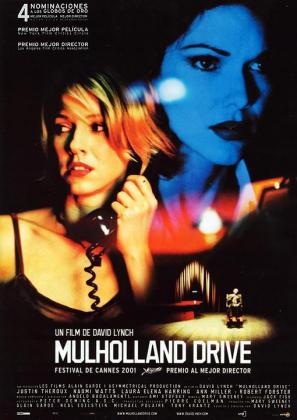
This film was made in 2001, and stars Naomi Watts, Laura Elena Harring and Justin Theroux. It is somewhat of a strange film, typical of David Lynch's repertoire. This film is no exception, with its story focused on using phsycological tricks to thrill the audience. This is regarded as one of Linches best projects and gives a perspective into how the intelligence of social analysis has become a big part of modern life since the turn of the millenia.

This film invokes a feeling of hazzy understanding into its plot, yet makes the audience feel a sense of fulfillment after viewing. It is based around a crash, of which a supposed victim went missing without a trace. It indulges into strange twists in the plot, enviroments causing a questionable confusion to the viewing audience, characters popping up in random situations and locations.
I found a good quote from a philosopher named John Searle which helps explain this films impact:

"The thesis that there is a reality independent of our representations identifies not how things are in fact, but rather identifies a space of possibilities... External realism articulates a space of possibilities for a very large number of statements."

After a car accident in Los Angeles, California, Rita is the only survivor, however suffers mass amnesia. She meets with the character Betty Elms, of which her story merges into. Betty is a young actress in search of Stardom yet takes a samarital interest into Rita to help her understand the mystery surrounding her. Unknown the reasons as to why Rita came to be in this situation, they pursue to gain knowledge about the conspiracy around Ritas attempted murder. Betty and Rita soon come to realise nothing is what it seems.
This film has a complex storyline to indulge in, its definitely worth checking out to gain a better understanding or a personal interpritation. Definintely interesting to watch and whether you get anything from it or not will help show Lynches success at playing mind games with his audience.
 
Chris

Wednesday, 5 October 2011

Film reviews: The Best Worst Movie


The Documentry "The Best Worst Movie" is based on the laughably bad 1990 film Troll 2. It follows the star of the film Michael Stephenson stepping behind the camera to talk about the low rated, low budget, dodgy horror movie itself. This Documentary proves that a perceived bad movie doesn't necessarily mean it wont find an audience. The original film was created by a group of cinematically uneducated Actors who joined forces with an Italian-speaking production crew to start filming the sequel to the 1986 film "Troll".

It is interesting how onwards into the future the film "Troll" has been taken under a different perspective. You will come to find that the general film related society will now look at it as a historical treasure, reflecting the perfect way to do something conventionally bad. From the awful acting, to the terribly unresolved script making the most random confusions and almost seemingly self conscious, humiliating camera work, this is exactly how a film should be put together to form a mesh of negative criticism.

This is an amusing, light hearted look into the work of something that was once rated so low that someone has become proud of it for that very reason. The soul of this film is in the right place at the right time, ready to accept Troll 2 for what it really is. In a sense it has become a comedy based on the art of film making itself. Interestingly, this movie got quite a high rating compared to the extremely low rating of the film it indulges itself within.

Rating out of 1 to 10? For amusment... 10... Oh.... my... God!!!

Chris

Film reviews: Inception

Inception is a phsycological action thriller Directed by Christopher Nolan and starring Leonardo Di Caprio as the main star. It was made in 2010 and delivers a strong, yet complex story about the power of the human mind.

Inception is one of them films that demand’s you to watch it more than once; it seems content in hiding pieces of its puzzle that on each viewing spawns a different realization. This film is difficult. It is based inside the dream worlds of the characters that Leonardo Di Caprio’s character “Dom Cobb” infiltrates in attempts to regain high profile information for corporate reasons with his extractory art of putting himself into another's dreams. By sneaking into the psyches of his targets, Dom enters the world of the dreamer, taking any vital information with him swiftly and without the dreamer’s knowledge.

When the film initiates, and it does so quickly, you have to keep hold of the plot tightly to not loose your placing. Just like a real dream world, things can become a mush sooner than they happen, uncertainty is somewhat a key. This very notion drives the film towards a postmodern perspective, the film is set in its world that continuously moves forwards and changes in relation to the external effects.

Being one of the most effective at his art, Dom Cobb has found that this talent is also his burden. He looses everything that he loves and that is close to him as a result of his lifestyle. It is this part of his humanity which he craves to grasp hold of, in which is also presumably his weakness and strength. He is given a chance at redemption by one last job that has the potential to give him his normal life back to one catch - it is the almost impossible of mind inceptions that he has had to pursue.

In retrospect to Cobb's usual goal of retracting something from someones subconscious mind, he is given the task to plant an idea directly into the mind of their target. This targets name is Cillian Murphy, a wealthy business man who Cobb's influence could be enough to help Murphy hire specific individuals with vital skills of importance.

In some ways this film reminds me of the Matrix on a basic level, by the way in which the character "plugs himself" into the mind which becomes an alternate reality in which the laws of phsyics can be bent. The Matrix has many holes and strange twists which take a fair few viewings to really comprehend, in many respects being an outwardly thought out depiction of mankind's perception on reality and his own effect on the world. This shares a familiar concept to Inception, where the ongoing changes to our static reality are blurred and painted in a surrealist approach.


As you can imagine, the way in which each shot is composed isnt neccesarily in the most conventional of ways, with a lot of use of such techniques as the dolly zoom effect to create a warped, disorientating effect.


Here is an example of the "dolly zoom" from the popular, hit horror classic "Poltergiest".


The Camera work in this film is edgy, clever and almost flows along in the streams of the contrasting dream world. The scenes are built to somewhat make the space of each set feel larger, introverted and yet claustrophobic at the same time. As the films events become more intense, this warping between scenes and sense of hyper reality becomes more prominent, yet strange due to its bending of real world rules.

Overall this is a strong, interesting story about regaining ones own identity over an occupation that has almost erased someones individual existance. It shows many levels of the Human mindset and how its concious efforts to survive can take us to the very edge of our seats.


Chris

Thursday, 22 September 2011

Kill Bill review


Kill Bill is a blood and gore packed action thriller released in 2003/2004 in two parts. Written and Directed by Quentin Tarantino, this film shows no mercy with spilling blood. Starring Uma Thurman as a Bride with certain revenge on her mind, we never find out her true name to conceal her identity. We also never see the main villain directly face on. This film is engaged in mystery, yet through an explosion of clips collaborated together we begin to understand its motive.
 
Originally this film was a long four hour epic, which was cut down for cinematic purposes into two films, the latter released as a sequel in 2004. In some respects, this goes to show the already unconventional approach to film making that Kill Bill pursues, with Quentin Tarantino really pushing the boundaries of what some may find visually acceptable. The use of camera work, breaking into the forth wall and cutting away into stylised animations shows this strange approach in full light. The way in which the film is presented somewhat is as if it is the bride herself reliving the the story, checking over her list of revenge.


The way in which the fights are set out are very well choreographed, you can tell that it is fiction and that these are not sword fights or acts of revenge based on realistic capabilities. This unbelievable notion actually helps to keep the film at its peak throughout, and while impressive you start to feel like you have been sucked into a computer game. It is exactly that the film is set out almost like the levels of a game, where Uma Thurman's character manages to take out each adversary one by one to get to the main Boss. This in many respects is good for the game industry itself, so therefore perhaps Quentin Tarantino had this in mind when making the movie.

The lighting used within this film sets the atmosphere for the scene itself, therefore if an epic battle is to be displayed where blood will be in its masses the film switches into a darker setting. The colour cheme for the most part is bright and simple, almost comic like in appearance.

The film starts with Uma Thurman being a hitman's target at her own Wedding. We believe she has been killed, which soon after we discover isnt the case. She falls into a deep coma for four years at a Hospital where she is sexually taken advantage of while unconcious. We then skip four years back into the future, where the bride engages into a violent fight with an ex co-worker named Vernita. The bride manages to assassinate Vernita succesfully with Vernita's Daughter becoming aware of the ongoing events after they had taken place. The bride explains to the child how she is sorry for taking her Mothers life, however if she wanted to take revenge when she was older she has every right. She will later seek revenge on the bridge herself as a young adult. We then see her look at who she wants to seek revenge on next, which takes us back in time again to determine the cause. The next in line is a lady named O'Ren Ishii, a Japanese-American. In going back four years we see how Ishii helps beat up the bride her fateful wedding day. This is what sends her into a coma, when the Police find her body during their murder investigation she is immediately placed into hospital. She is abused at the hospital while unconscious, even with one of the villain's henchmen attempting to assassinate her. The film continues with the bride fighting her way out of the hospital, travelling to Japan where she is trained by an old swordsmith named Hattori Hanzo. He also makes her a sword to help her on her quest to kill Ishii. In turn she engages in an epic battle between Ishii's guards and Ishii herself. The bride is the victor in this battle, which makes way for the second volume.
A very clever film indeed and even if you dont understand it the first time around you'll still enjoy its intensity.

Chris