Wednesday, 8 February 2012

Transcription - The Fawns world

The depiction of the Fawn will help to further develop the understanding of Mr Tumnuses world. Here are a few ideas so far of how he may roughly appear. I really need to draw his body. (I'll add that later on this very post!) This helps as I can now visually see what kind of nature he has about him, if I create a full character as a rough guideline I may be able to take things from him that would be used in his surroundings.


The development of Mr Tumnus may be irrelevant to the project overall, however the character speaks world for his enviroment, therefore I believe it is important to try to depict his character visually to developt an idea for his characteristics.

Chris

Tuesday, 7 February 2012

Visual research - Enviromental influence

To create the world of Mr Tumnus, I must first understand what makes him tick. The enviroment that he lives within will manipulate his surroundings, his personality and how he would place himself as a part of it. Therefore, it is important that I fully understand where his house is situated, what he has to live on, how he makes himself comfortable and how his enviroment would naturally depict his lifestyle and appearance even without having to meet character himself. The main aim of this project is to give the enviroment a feel for the characters personality, so it is instantly recognisable if you were to know of the character, or if not, at least clearly visually readable as to what kind of person lives there.

Shorne Country Park

Local to me, this is a fully untouched nature reserve (minus a few sculptures made by a few artists for the park itself) that is highly magical to walk through and has the appearance of an enchanted forest in parts. When I think of Mr Tumnus's house, I instinctively think of it being situated in an overgrown forest, which is thriving with wildlife and interesting views. Every turn seems to have the feeling as if you are being watched, or thrown into some magical world ready to welcome you with open arms. 


Goats/Mountain Goats

As Mr Tumnus is actually half Man - half Goat, I can only look into the world of the Goat itself. We know how a man may approach an object for eating something, (for example, a Spoon) but we must keep in mind that this creature may have half of the characteristic's that a Goat may possess.

"Goats will eat just about anything. They eat all kinds of plants and weeds, wood, but have an instinct for knowing when food and water are contaminated and will refuse to eat or drink. They rarely eat objects or clothing unless it has been made from plant material or wood." - taken from http://www.goats.co.uk/Goats.html

This information shows that Mr Tumnus would probably be a fond cook, collecting any random food that he can come across in the local area. He may also keep Goats milk in nicely carved wooden bottles, or glass ones that he has foraged from human passers by. I can imagine him having food hung up in his house, with a little indoor grazing patch (including a fence around it) which he fondly munches on for breakfast and supper.

"Almost all goats grow beards, males usually having a longer and more luxuriant growth. Many people who show goats trim the beards off the females as they feel they look more feminine without them. At agricultural shows all goats exhibited will be females, males are rarely shown due to their smell." taken from  http://www.allgoats.com/faq.html

Mr Tumnus most definitely has a beard, so therefore he will need a mirror of some kind where he can groom himself nice and tidy everyday, as Goats are apparently very clean and particular creatures. Also the next paragraph on this website is entitled "Do Goats make good Lawnmowers?". This begs the question, as Mr Tumnus is starting to appear like a respectable, gentle, vegetarian character wouldn't he keep a well maintained Garden where he grows his very own delicious crops?

I think its important to note that as Mr Tumnus lives in a snowy forest, he is more inclined to be like that of the Mountain Goat. However, most interpritations of his character show him as more of a regular type Goat, therefore he has to wear a scarf to keep himself warm in the cold climate and likes nothing more than to sit in his house next to a raging fire.


Lumberjack

I think as Mr Tumnus must make everything himself he must have skills in woodwork, therefore be able to cut down Trees effectively and carve them into objects that he wishes to make. Perhaps this could mean the colour schemes used within Mr Tumnus's house could reflect the traditional red and black chequered pattern that is frequently used upon the famous stereotypical shirts worn by Lumberjacks themselves.


BnQ's - and the Rainforest

That's right. You get some mighty fine Sheds in that Mother Forker. Some of the larger ones seem so homely you really believe you could live in them. In fact, some people do! In some parts of the world, some peoples homes are literally large, fancy wooden Sheds that reflect the local enviroment. For example, the houses within the Rainforest of Sambava show exactly this style of design, some being more simplistic hut-like buildings that reflect a more traditional way of life and culture.


Winter, Snow and Christmas

Obviously, Narnia is themed around the seasons in many respects. Where Mr Tumnus lives is magical and snowy, therefore one can't help but feel Christmas spirit amongst all the snow filled tree's of the forest and the kinder nature of Mr Tumnus himself. This very welcoming feel to Narnia that Mr Tumnus portrays creates a comparison to the birth of an adventure, like life itself. Obviously this links in with the whole theme of Christmas and Jesus. See what I done there? I know right, genius!


Chris

Film reviews - Akira (1988 - Katsuhiro Ohtomo)

I wont lie, im not a fan of this kind of style of animation, but hey for what it is its pretty damn good! Many people regard this as the greatest anime of all time. The story is complex and makes the audience think fully about the story it depicts. The voice acting, which is performed in both English and Japanese is executed well, the animation is carefully detailed for its style and uses techniques to really symbolise what the animation is trying to display to the audience.


Set in Tokyo in 2019 (not far off huh!) the government is trying to re-build the landscapes after World War III. The frightening thing is the way the world is right now, who's to say this isn't possible! Anyway, the neo-culture displayed somewhat is too much of a jump ahead of modern reality however portrays a brilliant artistic depiction of a futuristic world scenario. The main character and of whom the film revolves around is the biker Tetsuo Shima, who has psychic powers. The biker gang member Shotaro Kaneda, tries to prevent Tetsuo from unleashing the powerful and dangerous psychic Akira. After discovering these powers, Tetsuo goes mad with power, and tries to release Akira once again. It’s up to Kaneda and his side kick Kei to prevent Tetsuo from potentially destroying the world with his abilities.

The animation is this gets very violent and disturbing, sometimes I feel that animated violence can be more unnerving than real life depictions as you know it comes directly from someones mind onto paper. It's not for the faint hearted, put it that way. Not only is it visually highly violent (especially for its era) but it is one of the first films that indulges in the subject of phsycic powers. 

The visual basis of this film is highly detailed, yet typical of the stylistic anime trend with a high patience threshold  to the team who brought this visual masterpeice to life. The colour schemes used are typical of its time, lots of duller colours which are also used darkly with a high concentration on lighting to build suspense and a dangerous, evil tone to the animation overall. The music used is a reflection of the animations feel, it focuses around the suspense or the emotive expression of the characters. The angles in which the "camera" would pick up on the views are not always generic, they are shakey, violent and can become more sudden and unexpected with increased tension or action.

After Akira there have been many animations and films created on the subject of such like powers. 
This is an awesome film, it highly calls out to be watched by anyone with any interest in the comic world, anime or science fiction as it delivers in all these areas. Most definantly a film worth watching at least once for its bloody glory and place in animated history. 

Chris

Film reviews - Mary and Max (2009) - Adam Elliot)

Here's one that's right up my street, an award winning Animation shown at the 2009 Sundance film festival that indulges into a world that is somewhat cute in stylistic appearance yet contradicts itself via steriotypically grotesque notions, yet never straying too far from the heartwarming moral of the story itself. This Animation uses the same style as found in Wallace and Gromit or Chicken Run, for example. It uses real models to produce claymation (one stop motion animation) as its main technique to well executed effect. It is writer and director Adam Elliot's mind that conveys this film as a depiction that follows up to the Oscar Award Winning film "Hervey Krumpet".

 The film follows two main characters with relatively unhappy lives, who become unlikely pen pals that constructs a friendship that lasts for years. The question is, will they ever meet? It begins where 8 year old Mary Dinkle writes a letter including a bar of chocolate to a random person in the Manhattan phone directory (I wouldn't advise any 8 year old to try this) which to her suprise they reply whole heartedly. As Mary lives with her alcoholic Mother and her "busy" Father, this outlet seems nowhere near as bad as the chaos of her deteriorating family, so to feel a friendly presence soothes her keeping her positive and stops her feeling alone in the world.Max on the other hand is a lonely, forty year old over weight man from New York who often suffers from anxiety attacks.


You could say there is a hint of some sadistic peodiphilic notion, that there is a young child talking to a random stranger thus this creates a feeling of tension and an undertone of social disposition to the audience. You could say that the questions Mary asks Max, the fact that Max responds to her so frequently, could be a sign that an older man is feeding of the vunerability of a young child. However as the animation goes on this seedy tension becomes unapparent as the characters begin to grow onto the audience and they begin to further realise these two lonely individuals, no matter the age gap, just enjoy making sure each other are able to feel better about themselfs. In many respects, this tone of respect and human moral is not only touching but says a lot about true innocence and how it is hard to come by. They discover they can learn a lot from one another which as a result continues the longing to keep contact, nobody can understand Max better than a child anyway as he suffers from Aspergers syndrome so is always seen as different.

 These differences however cause the film to take turns on itself, where it becomes almost jolting to watch at times as the tone changes so frequently and sudden. It does this by showing how the two characters lives are from a personal level, for example flying into the world of Max's Aspergers syndrome, which not only teaches you about the condition but makes you unsure whether your supposed to laugh at or with Max, or if you are supposed to laugh at all. The film is clever at making you feel great opposites, comfort to uncomfort, joy to sadness, it could be described as a pulling and pushing the audience. The colour schemes used within this animation help to convey the dull tone of feeling alone, or like your in a dark place, clinging onto a hope that keeps ones life with a meaning for exsistance. To encourage this, Adam uses very monochromatic colour schemes, with the occassional hint of brighter hues where neccesary to fit the mood of the characters or where the story is headed. There is a decent voice cast used within this animation and the music choices go hand in hand with the imagery used to back up the characters and the action that unfolds around them.

Overall a funny film with some dark undertones that manages to swiftly sway between light hearted and beautiful touching displays that transcend into anxious parallels to its own innocence. The only down side to this film would be the mid section of the film slightly drags on for too long, however it doesn't distract away too much from the main point. Good film, good laugh, yet sad and thought provoking.

Chris


Thursday, 2 February 2012

Transcription project introduction

Here we go again, another project, another game. This time it literally will be a game, as I have decided to design a digital set for a computer game. That's right, lots of fun research to do! I have decided to take something within the field of visual art that interests me, the theme of fantasy and all things slightly out of this world.

I had a think about what would suit this genre and I came to rest with the story of "Narnia" as it is placed within a somewhat darkened setting (if seen in the original context) with various fantasy based inclusions in an environment that speaks out to more than just whats on the surface. I have become fond of two particular characters within the story that I feel visually have a lot to give, this being the Fawn Mr Tumnus and the evil character the White Witch, who seemingly proclaims herself to be the rightful ruler of Narnia itself. The artwork that this could produce would be very strong and either character would show a different personality altogether through their own living environment. As this project is about the set design, these sets must make the characters personality seem obvious and give the onlooker a feel for what the character who inhabits the setting must be like.

Personally im more interested to explore into the world of Mr Tumnus further, as I feel it has a lot more to give than has currently been explored, there is a lot of rich culture surrounding the character and references to a collaboration of different things that together create his world. I love the dark undertones to the Narnia story and the visualization it gives, therefore as I wish to do something more detailed for once this game shall be aimed towards the more older teenager to adult market (16+).

It would be interesting to create this digital set based on the mixed feeling of awe and fear how the little girl Lucy may have had towards this strange new environment. Without getting too ahead of myself, I believe it would be more professional and interesting if I presented this work with a title that goes through a wardrobe, perhaps with a few scenes showing the location of Mr Tumnus's house from the exterior. In my tutorial with Alan I was advised to concentrate on the interior of his house, so I shall do just this. If I get the time however, I plan to throw these additional pieces of visual information together to make a nice build to understanding the feel of location and story.

Here is an image of the half goat, half man (known more commonly as a Fawn) friendly character "Mr Tumnus".


Here is a brief video from the film adaptation to the book showing the entrance to Narnia and an introduction to the character "Mr Tumnus".


As you can see he lives in a cold, harsh environment. His fur and half goat depiction helps him to overcome this, therefore he adapts quite well to his surroundings. Therefore, his lifestyle is forced to be very organic to his surroundings, using what he can to survive and stay comfortable. This would mean the objects in his house would mostly be home made and from things close by to his home, or from lost items of people coming through the forest may have left behind. I believe I may use the music from the film adaptation itself for this project as it is already a piece that would be relevant to the character, therefore you would most likely expect to find it within a game, even if based on the book itself rather than the film.

One thing that this reminds me of is Yoda's hut in Star Wars (Episodes 5, 6 and we see the location in 3) as it was a home built totally based on what the environment had to offer.


  • Here is the interior of Mr Tumnus's house in the film adaptation of Narnia.


  • Here is the interior to Yoda's hut on Dagobah as seen in Star Wars Episodes 5 and 6.


 My tasks to complete for the next week are visual research, creating some concept art and trying to get into the world of Mr Tumnus so I can present it at my next tutorial session on Thursday.

Chris

Tuesday, 13 December 2011

Film reviews - The Trueman Show

The Trueman show (1999) was Directed by the creative mind of Peter Wier. This film uncovers that Postmodern concept of not feeling like your own reality is actually correct - that the vibe for life is somewhat altered and has no real grounds for understanding. It is based on how a man has grown up in an artificial reality since birth, that he is the main star of a reality TV show that basically recreates the ideal suburban American dream yet exploits a man as if he is an Animal in a Zoo. It is the ultimate "Big Brother" - a story about seeing through the lies of organised reality and finding out ones own true identity. It is exactly this notion that "Trueman" (Jim Carey) comes to find when his life seems to go nowhere; That there is no place for his own choices and interests to develop, that anything he reaches out for is torn away from him. This builds suspicion, that his own reality isn't exactly that - it isn't his own at all. The feel for the repetitive daily life cycle of Trueman, from the same people talking to him everyday, the same Car's passing at the same time, to his shifts in a typical dull Office and how his closest friends and family seem to "act" in a fashion that seems like someone else is with them. It all becomes too much and we see Trueman start to unlock these strange puzzles that seem to coincidental to be "real".Then one day Trueman feels a real surge of emotion that he seemingly hasn't felt in a genuine manner before when he meets "Lauren" who's real name is Sylvia (Natasha McElhone). This feeling is love, and we see Trueman scurrying around becoming obsessed to find out who she is. Fortunately for Trueman come to meet this character on more than one occasion, who eventually pulls Trueman to the side and exploits the truth about his curiosities. With nowhere to hide or run, Sylvia has to tell Trueman all she can as quickly as she can and insists that Trueman is to find her when he gets out. The film continues to spiral into Trueman doing his best to escape the fake TV enviroment, being warned the world outside is only as real or more so imperfect than the one he has grown up within.


The way in which this film develops a meta narrative about reality and what is real somewhat creates an uncanny depiction of the world around us and gives this film a strong, heart warming moral about individuality and what it means to be alive.

The colour scheme and lighting used within this film really reflects an almost perfect American suburbia, yet to a point where it is so cliche that it seems to shout that there is something not quite right about it. It consists of bright colours and almost a 70's style of spirit. People tend to indulge into advertising items on set, which is actually a real advertisement for a real product, usually getting Trueman involved as much as possible.

The language used is very clean and appropriate for all ages at all times, it seems that the art of swearing and violence is as  non existent as the realness of the people in Trueman's world. The music used within the film reflects the typical kind of music you would encounter in a drama series on TV - it moves in and out with the emotions that the characters portray. We see the people in control of the music behind the scenes of Trueman's world when the film shows the people in control of the shows ongoing live progression. It is interesting to note that Trueman only ever really listens to music of his own within places like the Car radio, where it can transcend into the output of the live show itself. Obviously, any atmospheric musical composition made in the control room would clash with any musical sound Trueman plays by himself. This like many things however is something that is controlled in a way Trueman becomes blissfully aware of, even family photographs of himself, or false truths imposing fears to keep him from indulging in his interest of Fiji. The camera work is a mixture of the Big Brother style narrative with the use of regular film shots, yet it all feels like one large well edited observation of someone without their consent.

Overall a fun lively, yet heart warming and slightly controversial film.


Chris

Film reviews - The day the Earth stood still

The Day the Earth Stood Still (1951) was Directed by Robert Wise and helped to spawn the start of the "Alien invasion" movies that we still see popular to this day.

We see the Alien Klaatu (Michael Rennie) and his robot sidekick Gort (Lock Martin) land on Earth just post action of the last World War, which is spawned concern from the neighbouring civilisations in the starry consolations above. Klaatu must inform the world leaders that if the people of the Earth did not change their ways then the aliens would have no choice but to destroy Earth to protect other worlds in the Universe. As this task starts to appear more difficult than he first perceived, Klaatu decides to embark on further action - by draining the world of power to get attention.


The film work produced here is classic of its day - lots of clever tricks to get around things before the invention of the special effects we have today. Things such as reversing the tape of the door to the space ship opening to make it close and save costs on film and time - the space suit of the robot Gort having two models, one with a zip at the front for behind shots and one with a zip at the back for frontal shots. It is also to note that this suit was very heavy, so the scene in which Gort carries Helen (Patricia Neal) he wasn't actually carrying a real person, but was carrying a dummy in replacement.

For its time the special effects used were state of the art, however you can see how they have tried to create story around over excessive use of the primitive (and expensive) effects of its time to avoid extra cost and to keep the film believable. It was originally wrote by Harry Bates, then later turned into a screenplay by Edmund H. North. The filmic version of the original story is vastly different in many comparisons. In the story, Klaatu is killed my a maniac (not a soldier) straight away on arrival to Earth. It puts mention that Gort the Robot comes to life every night to continue his quest and that he recovers a recording of Klaatu's voice from his tomb and uses it to make a copy of him. The way in which Klaatu warns the Earth of the consequence towards its actions is different to the overall way in which the film conveys this; From giving a Scientist the key to an extreme mathematical problem, to deactivating all electrical appliances on Earth asides from those which affect Human safety and being revived from the dead to give mankind the required message. When Klaatu is killed, Gort brings him back to life temporarily to communicate with the Humans gathered around the Spaceship, which is obvious for the many people to be the source of the strange events that have occurred. In the original story, it is then revealed that Robots are the actual true Masters of the Universe and that Organic beings are of less importance in the hieorachy of exsistence.

A film which uses every display of emotion, visual magic and clever twists to the plot that it can, "The Day the Earth Stood Still" really stands out as a legend amongst Science fiction.

Chris

Monday, 12 December 2011

Film reviews - American movie

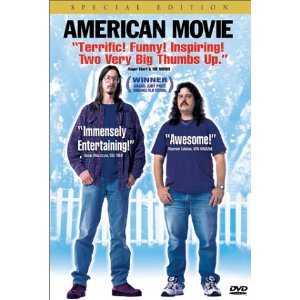
American movie (1999) Directed by Chris Smith that was, ironic to the films plot, premiered at an independent film festival where it achieved the Grand Jury Prize. This film is a Documentary based on an enthusiastic, aspiring filmmaker who wishes to fulfil the creation of his own incomplete horror movie by financing the project himself and smashing his dream. Starring Mark Borchardt as the avid Filmmaker, we see him scramble through attempts to rally up a usable team to complete his creation, the cheesy low budget horror movie "Coven". It was his own demons that originally stopped him from pursuing this dream, but no more - he is determined to over come any bottle that comes in his way to fulfil his dreams. Wanting to over come this lack of self asteem he is determined to not fail: by asking anyone from relatives to the local theatre, pulling together a cast which although he struggles to keep in line prevails in the end with a classic, heartwarming moral of realising his movie is more connected to his pride of being American and what it means to be one - it is his own "American dream".


As you can see the film itself is comprised of the typical first person style attack of a Documentary, giving the audience a "feel" of living out what the subjects go through themselves. This therefore becomes a more personalised stylation of film, where the audience feels an interaction with the cast and a more emotional understanding of  the characters.

It puts the fight into how if you want something, then your supposed to get off your arse and do it. Like many people, myself involved especially, we all have dreams but all too often you will see that person who can't stop throwing off excuses and never gets to the point of their ambition. It is this very feeling that Mark storms through, which although we witness his fatigue from time to time he never lets himself down. In many ways this film therefore is inspiring to everyone who watches it, it gives you that positive feeling to make you want to get up and acheive your dreams.

In many ways the fact that this film is a film about making a film by a filmmaker basically shows a metanarrative to itself - everything that it does somehow references itself in the structure it is based around.

Chris

Friday, 9 December 2011

Postmodernism lectures - What I've learned

  • Postmodernism is difficult
We was brought to understand that this subject is without any easy discretion, if one believes they understand it then they haven't really got anywhere close. The loose rules of Postmodernism do not allow for someone to factually understand, only theorise in opinion. 

As the first slide of the presentation suggests:

“The concept of postmodernism is not widely accepted or even understood...”
Fredric Jameson, The Cultural Turn

It is as without grounds as religion or fairy tales themselves, a growing concept that almost views existence within a fourth dimension. What is real? Is reality different from one person to the next or is it fixed on a solid plane? How can we assure that the specific modernist rules towards life can stay a permanent fixture? What makes the static beliefs about the world seem that way, are they not just based on cause end effect? Which in turn wouldn't this prove that there are no stable rules to understanding physical reality?

You can be told how the world works, but to have faith in yourself with your own acceptance of your life and existence requires a conscious mind, therefore each individual having their own experience and this is what a postmodernists views will spill from. Individual experience is like time itself, it changes, but no one moment can be the same again. What that conscious experience takes from this concept is what their true perceptions on their own reality come from. 

This lecture also brought forward the visual representation of the Hydra, a Dragon or Serpent like creature with many heads. This basically shows that the multiple heads represent different perceptions of reality, the many possibilities that reflect back unlike modernism where the rules are wrote down to imprint security and a firm dictatorship of knowledge.


This suggests towards the open theories held within Quantum Physics, where this reality can be a possibility of many which are on going at the same time within different dimensions. Overall the predicament of this is that living in a "Hall of Mirror's" is not proved to be real, yet it cannot be flawed. Anything, even the weather, has options in which mirror to use - as to what reflects the world correctly to that particular catalyst. However, the way to perceive this indirectly as a postmodern outcome is that there was the "choice" to approve of reality within a different way.


When a piece of music is produced, the artist will naturally take claim to inventing the song and therefore owning it's existence. If another artist was to take this same piece of music and replicate it to their own experience, it could be argued that this would then belong to them. It is about taking an idea already constructed, understanding a difference then acknowledging something that can belong within it's spectrum, yet deconstructing it purposefully to become personal to another source .

Postmodernism is the abstract view on everything that we know, contorting the world into something that seems unfamiliar or new, bending the truth to be false and therefore just becoming more conceptual and God like than a solid ground rule.

Modernism:

Whereas Postmodernism is an extension of the enlightenment movement, allowing space to warp the boundaries of conceptual landmarks, modernism is a step behind in the opposite frame of mind. Modernism is about current trend's and ideas about the world which follow realistic tendencies and state themselves as correct. Modernism came into play around the late 19th to the early 20th Century and dismisses the claims made by the romantics during the enlightenment period. Views on an upbringing of society and its sub-categories were to be met by opinion based on rules of modern ethics, perceiving outside of what is known as correct is blasphemous to its nature. It is about using the innovative forms of expressing what is known to reflect the world as developing but realistic to it's current state.

Therefore postmodernism is the dream state of mind that surfaces on the modernist's rule book, which is to view this static experience of life as it is stated to be, how it appears on one level, yet becoming an expression from this plane and observing from another platform altogether.

In a recent discussion with a friend about the subject of dreaming itself we decided upon the notion that within our three dimensional daily lives it is hard to perceive the concepts of such difficult notions like postmodernism even if you accept it's exsistance. However, when we sleep we view our world differently, we see in more than one defined opinion - the world in our subconcious mind is far greater and more expanded into the realms of postmodernity than we are able to conceive as acceptable in a woken state. The dream world is potentially a four dimensional playground, a trick to the subject of what is real and the overthrow of a perceived reality we are in control of.

Where postmodernity can be seen as this alluring powerful thing with plenty of space to allow for everything and anyone, it is also a highly dangerous thing - It should give way to unity for mankind, however as it allows this space for beleiving in the individual experience it also creates the danger of becoming a unity of disunity. Postmodernism is it's own set of paradoxes, which is further more why it is so difficult.

Notes for essay:

Title - There is no Spoon; reality and the Postmodern paradox displayed within "The Matrix".

Notes to make:

Introduction

Explain about how the matrix sets to deliberately make the viewer question their own existence, how their personal experience of the film can be anything from euphoria to confusion. Explain how this film has created a social impact on the general public and their perception to how the information age is making nothing a certainty. Show that the world is engulfed in controversity via scientific developments and different oppositions.Include a quote from the film about what is real and expand on it. Refer to how in the film it is said no one can be told what the Matrix is, just like there is no definition towards Postmodernism itself.

Arguement:

Discuss the point of how the Matrix deconstructs the world that we know around us, how it warns us of what could be mankinds future if we rely on technology, how we cant be certain that this future isn't here in the present. Again take a quote from the film explaining about time and the truth, explain how this then begs to question times credibility, a man made concept that is only exsistent through our ability organise and understand events and experience. Explain how to question ones reality in the sense of the films experience is somewhat like the ouroboros, that it can be a repetative loop of the understanding of reality and time - how people who die in the matrix are fed from the pulp of the dead.

Show comparisons to post modern theory:

Explain the way in which the Matrix applies postmodern theories to make the film seem more believable or innovating, how such rules of bending the known "truth" of reality is what distorts it into a whole new set of rules, a world of choice and a concious id that the viewer takes on themselves. Talk about Frueds concept of the Id, Ego and Super Ego. Explain the scene about the child and the Spoon: How he explains quite simply in order to bend it you must know that there is no Spoon, it is merely a representation of manipulated artificial reality. Explain how this reality is a choice to believe in, it is a way in which you perceive your surroundings within the Matrix's confindes - for those lucky enough to be "saved" from the Matrix this becomes an apparent observation. Show a quote from the film about the "red pill and the blue pill".
Explain about the link between the dream world and the physical awoken world - What is different? The forth dimension theory. Explain how this could be able to free the mind more than when stuck in a generic, "real" concious world. Talk about the enlightenment period and romantisism, how this "wake up" is a rebelion to the world around you, that there is something you can't quite grasp about being alive in this exsistence. Show how within the Matrix trilogy we see the "creator" of the Matrix, who we come to find is not directly the original creator, but a programme of his design which continues the world in his genius. Explain the way in which this is not only reflecting a person, but also another place in time which feels current; it is merely a reflection directly into the present. We come to find that there has been many "chosen one's" like Neo, all who had the choice of salvation or destruction. It is clear the chosen one is merely a threat to the system of the Matrix, that that person alone has the power to corrupt it - refer to this as the mise en abyme of the Matrix, how it Mirrors itself over and over. Also note that the Matrix is a concept that in the mind of a Postmodernist could be real, therefore you watch the film which tells the audience of a world we cannot see, there is a greater power within society and it exsists in the world we see. Show how the world is becoming a technologically dependant cultural experience and that this reliance on machines could cause such an extreme in the future. Mention that this development IS a concious one, that people will refer to in comparison to science fiction, yet allow for it to happen through adaptation. Include that it is also possible, according to the Matrix, that there is an unknown uncertainty that our world is real at all - therefore we ARE already within a Matrix. Use religion and death as an example, also how if we are within a Matrix we may be being watched ourselfs by others outside of it's exsistence; we could potentially be a warning to another culture in time or conciousness that we cannot perceive ourselves. Explain lost identity and how Neo is portrayed as both "Mr Anderson" and "Neo", almost creating the same person to be two different seperate entities, that there is no true understanding of self identity, only individual experience, which is why a concept such as postmodernity is so difficult to describe.

Explain how Neo is the Avant Garde to the Matrix, how he is the force that can be creative with his surroundings and innovate a new system for the world to adapt to - the prophecy of which he is said to fulfill will change the world for the better, so man and machines can live in harmony, with respect and control.  


Chris


Wednesday, 30 November 2011

Film reviews - Lost in La Mancha


This film is based around the film that could never be made, the tale of Don Quixote. It is said to be a cursed film, a hex upon whoever tries to tell it's tale to fail and end up with nothing more than broken fragment's of ingredient's that go no farther than the bin. Contract's were unsigned, budgets were to be met, deadlines were to be made and nature discouraging the team spirit. All these thing's helped to ruin the adaptation of Don Quixote that Terry Gilliam would obsess over to become his filmic reality, however putting together this amusing film as a result.

All the film from the start is based within a Documentary style follow along with the crew, as if to be used for a DVD extra, yet innocently unaware that this is the main camera for their infamous success.  Nevertheless, Gilliam continued with his quest, but after a mere six days of shooting, Spanish Air Force jets ruined several takes, flash floods destroyed several sets, and as the Film project struggled to pursue a positive course the elderly Actor playing "Don Quixote" himself, Jean Rochefort, suffered from a severe back injury and could not continue for medical reasons. Rochefort's departure was enough to put the film on a Hiatus that sent the Film's pursuit into a fallen ending. We even see modern heart throb actor wonder boy "Johnny Dep" involved on the project, almost treated as a nervously handled pile of Gold as nothing else on the project was to give it any viewing substance. In many ways, Dep seems to be acting as himself, aware of being on a Camera even off set and has a flow about him that seems to depict a role even through a documentary of this kind. The use of Jean Rochefort was almost comparable to that of Ed Wood's obsession with his prized Bela Lugosi and in many way's this film reflects the same audience involvement as Tim Burton's adaptation to Ed's life in his own film based Biography on Ed's career. Interestingly enough that Johnny Dep played Ed and plays the role of a creators key to success within this awkwardly amusing piece of work.

Instead of realising this experience as a negative, they saw the amusing revelation that they had caught this catastrophe on camera for their film diary and that as this seemingly did not get caught up within the bad omen that the onlooked film suffered itself. If anything this caught the comedic element of how the film fell apart, giving the audience a heart warming look into the world of a man's masterpeice not developing exactly how he wishes to see it, yet laugh at his luck with a good spirit knowing it has worked out in it's own way.

Obviously, the Camera work is natural, not as if directed but brought on in a first person perspective, yet managing to not seem obvious amongst the crew that it is observing upon. The Camera picks up conversations and moment's of heightened emotion, all seemingly unaware of their action's becoming an unscripted movie. What you will come to understand about this approach is it simply becomes a film within a film, an onwards self reference that turns the original depiction into a new frame of outcome where the acting becomes real life and the experiences are real.

There is clever use of the footage collected, by turning it into usable scenes cut down and edited together on purpose to develop something filmic out of something that originally had no intent to be existent. You will on occasion notice the film steps out of itself to be narrating about how the experience was ongoing, how it should have been and where it went wrong, or consistently approaching the story of "Don Quixote" with an obsessive nature. It even on occasion indulges into 2D animations which daydream away from the reality into what could have been and is still merely a dream in the mind of its creator, a film full of restrained disappointment in what should have been Terry Gilliam's finest creation.

Chris Simmons

Science, Reality and the Devil - Breif introduction to Postmodernism essay concept

For my Postmodern essay I wish to indulge into the world of Science and the separated debates that surround it's existence amongst mankind. I wish to pursue this via using a film that references a technological age that mankind has developed beyond itself using Science, yet deconstructs itself via depicting the technology as something undesirable or inhumane.

Science has existed with a prolonging shadow of an unprecedented discouragement since the rise of Post modernism. In today's culture we see that many find it hard to comprehend the structures both on academical terms and in popular culture. Science has always been scrutinised by those of a religious position, where the methodological steps of such theories as evolution have been disregarded as blasphemy towards a God as being the creator. This doesn't seem to have any stable sense however, as the world does develop and move onwards with complete proof and evidence of such a progression, so why couldn't this notion co exist with a God? Science as a constructional entity is seen as an avant - garde of an exploitary method of discovery, a discipline with no boundaries that runs wild in its own playground, something which can deconstruct the moral of nature itself.

We find in films such as Metropolis, Equilibrium, The Matrix and Blade Runner being examples of this notion toward's technology and its co-existance with mankind.

Chris

Thursday, 24 November 2011

Character tutorials

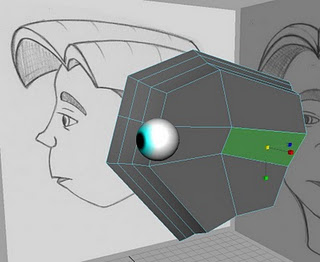
Well, I seem to not be able to trace my work in the folders on the University Computers. Therefore as I know this project isn't going to be graded any farther from last year i'll finish off what I started.

  • Head


  • Jumper


  • Trousers


  • Shoes


  • Arms


  • Full body


Chris

Sunday, 20 November 2011

Scream 4 review

Film reviews

Scream 4 (Wes Craven - 2011)

Scream 4 is an explosive, violent action packed film full of references that pay homage to its original Trilogy. As the original film "Scream" was so popular, it brought a whole new wave of typical generic acts that it managed to elaborate, thus many films of a similar genre ensured a depiction along this path. It spawned an ironic comedy called "Scary movie", which meta narratives the acts performed within the Scream movie and other classic films of its kind. Considering its place is still within the horror genre it is well placed towards a light hearted context so that the audience can clearly gain a sense of appreciation through its stylistic techniques. This makes the movie fun to indulge into, however adds more room for the story to develop. In a similar way to films such as "Kill Bill" or "Scott Pilgrim V's the World", we see the rules of either cinematic or real world laws of nature failing to apply. A post-modern edge such as this helps the story teller to interact further with the audience to almost communicate farther with them than if submerged within a generic modernist style cinematic approach.

The story is a depiction of self indulgence into its own trilogy, which done well enough to almost set the rules of how a slasher film should be layed out. Therefore, it pretty much is a reference to itself throughout the entire movie, which is what the characters must follow to ensure their survival through the film.
The film opens with a series of openings reminiscent to the original Scream movie, where the character Casey was killed off within a few minutes, setting the scene for the films intention from the start. In this film, however, this event is played on and we see a set of characters watching films from what is the "Scream" series within its own movies world, entitled "Stab". In a sense, this becomes a catalyst for the whole movies pursuit.


Scream 4 seems to somehow over rule the trilogy and offer more scares based on what we come to expect from the other films and their ways of producing sticky situations. This film develops in a relentless, unapologetic depiction of meta reference and mind boggling twists which turn the audiences anticipation upside down on a consistent basis. In other words, if your watching this film trying to work out the storyline and who done what, you wont fully gain any full understanding until the end. You will come to find plot holes aplenty and moments which could make you wince with an awkward smile, but it definitely shines in the right places. Theres no doubt a sense of deconstructional humour fully injected into this

The film is basically a "who done it" Slasher, where the murders appear reminiscent to the murders of the small town that the original Scream, yet we all know it has to be another psycho on the loose with some strange new motive to reinact these crimes. In turn we come to find that it is Jill (Emma Roberts) the Cousin to Neve Campbell's character "Sidney" who is jealous of the attention that Sidney receives from being the victim of the original Woodsboro murders.

Wes Cravens suspense set-ups are a little overcooked, but he does manage to keep things moving at a fine pace considering his task of juggling umpteen characters and the necessary tonal shifts within the pace of the movie.
The musical stamp embedded within the duration of the movie stays consistent to the previous Scream films, and to that of typical Teen/suspensive Horror movies. The use of the camera, lighting and dialogue hasn't changed much either, so although the film somewhat feels old and like used property, it flows forwards with so much familiar ground yet builds many opportunities for something new and appreciative for the audience to enjoy.

Overall this is a great movie and I think it is the best of the Scream films created as it somewhat summarizes the whole franchise.

Chris

Film review - Funny games


Film reviews
Funny Games (Dir. Michael Haneke - 2007)


If disturbing chaos is your thing, for whatever reason, then this is the movie to indulge in. The 2007 film funny games reeks of relentless self introversive nature. We come to find uncanny effects of how a familiar, comfortable home can be turned into a sinister prison for suspensive acts of terror. 
 Due to its calm nature, unorthodox timing and use of jokes in horrific situations that many would consider the material of nightmares. Unfortunately, things like this really do happen in the real world, and when they do they come unexpected. Thus, just like the somewhat "trippy" nature of this film, the story may be confusing in the scary reflection of real life circumstance. 


I found myself backing the two "men" in the film of whom were committing the crimes, it was all so "innocent" and charming to watch. Their brutality was hidden under a white sheet of manners, most usual mannerisms of violence being churned out in an opposite approach. When the villains left the film for a short while, I became bored watching the Mother (played brilliantly by Naomi Watts) scrambling around in attempts to resolve her horrific situation. The film suddenly lacked its kick in these moments where I observed from my colleagues a sense of unease, a disturbance, an awkward silence, as if the room wasn't quiet enough already.


The film is based around American suburbia by a beautiful landscape, a lake with neighbours spread across far and wide. Some neighbours would reach each other by boat, as a result of the kind hospitality that these individuals show they enjoy the warm company of their tidy neighbourhood. So, everythings perfect. Brilliant scene for what they wouldn't expect - murder - and lots of it.


One sunny afternoon Ann Farber is preparing her family a dinner when the doorbell rings. Her son Georgie answers, only to come face to face with a ghostly faced smile from a well groomed teenager. This boy is called Peter, who lurks his way into the family house by asking for Eggs claiming to be coming from the house next door. Already you can sense the unease, this entity in the house gives off a presence which shouldn't be there, he is almost uncanny to his own image. His nervous position covers up his bad acting when he repeatedly drops the eggs until there is only a few left. In comes Peters co-killer Paul, dressed in a similar fashion and just as clean cut in appearance. The violence starts as Peter manically asks for the eggs, and swings a Golf club at Ann's husband, George Farber. This Golf club was also used as a test weapon on the family's Dog, which Ann later finds dead in the back of her Car. 


One thing to note is almost how idiotic the family was, how they had the chance to easily over power the two boys yet they never took the chance. In some respects this is why I prefer the villains in this film, they are intelligent and seem to be merely Cats playing with Mice. As a result I would of found it even more thrilling if we saw multiple family murders within this film, and some outside force attempting to track them down and stop them at their game. 


I found the use of breaking the forth wall interesting, an addition to an insight into the maddened mind of Peter and Paul in their attempt to plan their murders. In some sense, what also made this movie interesting is that as Peter and Paul are aware of the audience, it almost seems like this murder has been fixed up, like a film they have seen one too many times that they are trying to reconstruct. The addition to different movie like qualities, such as rewinding time when Ann kills Paul to bring Paul back to life are interesting, and to me show that indeed the two boys are merely just playing nothing more than a game. Who's to say their not harming anyone at all? Perhaps they plan to rewind all of these events once they have finished, perhaps they are all in on the act, perhaps they are really the captives inside a prison of some sort being made to act out a television show to save their own lives. Thinking outside the box suddenly makes this film less violent, or "weird". 


Paul: You can see it in the movie right? 
Peter: Of course. 
Paul: Well then she's as real as reality because you can see it too. Right? 
Peter: Bullshit. 
Paul: Why? 


This confirms my previous take on their situation, also making a somewhat disturbing analysis that anything you see on the screen is just as real as anything you see in real life. This brings the notion that the film itself is actually real, pixels are producing light, just like any other source of image will reflect light into your retina to produce what we call sight. So are the people in the films doomed to eternal deaths and misery? Is there anyway to save them? Of course there is, they answer this themselfs - rewind! However, just like real life there is no way you can prevent this from happening, as someone out there will be playing the same film anyway. You cannot escape from death.


Paul and Peter continue on their quest, betting that the family will all be dead by morning. Of course, they are right. They manage to kill of the family one by one, starting with the boy. They play with the family by leaving them for a while, hoping they would try nervously crawling out looking for help only to crawl back into their path of pure passionate evil. Dragging them back into the hell of their own home, they finish the job. As morning kicks in they don't break their bet, they push Ann off a boat as they float across the peaceful lake to their next awaiting innocent victims.


Overall, good film. Kind of quirky, had its cheesy moments which made me laugh, the violence was a little bit too forced at points and in some respects it was a bit too slow mid film. On another perspective this film is incredibly disturbing, managing to unlock that confusing yet uneasy sense you would usually associate with nightmares. The storyline I felt should of been broadened out to a larger scale as I previously suggested, to make this film even more bloody and disturbing, also giving it a chance to fly off the wall with a tons of additional cinematic blasphemy.


Chris